Jiří Kratochvil
(1940)
Novelist, author of short stories, novels, essays and columns, playwright – author of theatre and radio plays
Jiří Kratochvil started publishing his works as early as the late 1960’s, but for the next twenty years, he appeared in samizdat only as he was not allowed to publish officially. After the fall of the communist regime, he soon became one of the most translated contemporary Czech authors. Kratochvil is a leading figure in contemporary post-modernist Czech literature.
“Kratochvil’s works of prose are the greatest events in Czech literature since 1989.” Milan Kundera
Selected bibliography:
Medvědí román, (A Bear’s Novel, 1990, novel)
The samizdat edition of this work, which consists of three parts and an epilogue, raised an uproar in the mid 1980’s. The individual parts deal with different topics and have different narrators. Gradually, especially in the epilogue, what unifies these three stories comes to the surface, as does their relation to one another and complicated reflections; a possible key to the interpretation of the three faces of a single novel is offered to the patient reader. In this work, Kratochvil presents his poetic style of writing a novel as an open system.
Review:
“Thanks to the originality of its narrative structure, the importance of its statements referring to the Czech world of the recent past, and to the quality of its literary language, A Bear’s Novel is definitely one of the most precious works published since November 1989 in the Czech Republic.”
(Květoslav Chvatík, Tvar)
Awards:
Tom Stoppard Award, 1991
Uprostřed nocí zpěv (Singing in the Middle of the Night, 1992, novel)
At the core of this novel is the autobiographical experience of a child of a post-1948 emigrant who grows up in the 1950’s Brno, surrounded by “caring” policemen and self-imposed supervisors. At the end of this structurally complex novel, two threads of plot come together in the leading motif of a search for a father – as well as for the hero’s own identity.
Awards:
Czech Booksellers’ Prize, 1993; Prize of the Literární noviny journal, 1993
Foreign editions:
Anaya, Spain 1992
Rowohlt, Germany 1996
Gallimard, France 1999
Edizioni Anfora, Italy 2005
Review:
“Kratochvil enhances the fragile poetic of a Bohumil Hrabal with the rough churlishness of a Günter Grass; he combines the cynicism of a Milan Kundera with the dreaming of a Bruno Schulz.”
(Andreas Breitenstein, Neue Zürcher Zeitung, Switzerland)
Orfeus z Kénigu (Orfeus from Koenig, 1994, short stories)
This book contains shorter works of prose written over a period of more than twenty years, from the mid 1960’s to 1990, the year after the revolution. The reader is presented with the author’s complete work to that second date, arranged retrospectively against the flow of time from the most recent works to the oldest. An uneasiness, which penetrates everything and envelops the world, is the unifying characteristic of this collection of Kratochvil’s works.
Review:
“The result is a collection of precisely shaped short stories, well-balanced compositionally, linguistically and stylistically.”
(Tomáš Kubíček, Lidové noviny)
Má lásko, postmoderno (O Postmodern, My Love, 1994, short stories)
A collection of thirty-seven petite, “one-minute” stories told in the first person, inspired by the One Minute Novels of Peter Altenberg, each of which playfully incorporates one of Altenberg’s sentences. Kratochvil’s intelligent puns contain contemplation, self-reflection, suggestion, hints, symbols and allusions hidden between the lines exactly as the post-modern spirit requires, but his fantastic, sensational and hilarious plots should attract unassuming readers as well as more demanding ones.
Review:
“The author plays with his potential readers, mystifies them and holds their attention with his art of colourful fabulation and action that is contained in a very compact shape resembling a brilliantly pointed anecdote. Thanks to this open communication with the reader, Jiří Kratochvil is one of the best storytellers in contemporary Czech prose.”
(Jan Malura, Tvar)
Avion, (1995, novel)
Avion is the last of a trilogy of novels, containing some of the characters (with slight modifications) from Kratochvil’s previous books A Bear’s Novel and Singing in the Middle of the Night. As with all Kratochvil’s prose, Avion is tightly anchored in Brno, the author’s city of destiny. (The world-famous hotel by the architect Bohuslav Fuchs gives a name, place and as the author comfirms, a structure to the novel .). In the Czech literary environment, this is an unusually weighty work of prose with many bitter undertones.
Awards:
Egon Hostovský Prize, 1996
Rights sold to:
Ammann Verlag, Switzerland
Review:
“Avion is written by a virtuoso hand, by a man who lives by literature and for literature, extracting and digesting his experiences and transforming them – not just with his mind, but somehow with his whole personality – into works that take a unique place in the world of contemporary Czech literature.”
(Josef Chuchma, MF Dnes)
Siamský příběh (Siamese Story, 1996, novel)
The strange adventures of a child and a man that take place between 1946 and the present. Two main and numerous secondary storylines mingle, miss each other and meet again – that is why this is a “Siamese” – a twin - story. The action takes place in a small village on the outskirts of Brno in the foothills of the Czech-Moravian highlands. This is the soil that nurtures an unusual love story. The reader is drawn into the intensively erotic dreams of the child’s developing sexuality.
Review:
“Siamese Story is one of the best books published in the last couple of years.”
(Antonín Jelínek, Týdeník Rozhlas)
Nesmrtelný příběh (Immortal Story, 1997, 2005, novel)
The major part of this work, the complete name of which is Immortal Story or the Life of Sonja Trocky-Sammler or the Carnival Novel, is told by the eponymous Sonja, daughter of a Russian Orthodox priest and a German woman, who was born in the first hours of the 20th century. A major part of the narrative is the story she tells of a never-realised meeting with somebody, - somebody who continues to seek her for the rest of her life, in the form of various animals. Her abilities and talents are extraordinary and her mission is anything but commonplace. She always gets very close to the great events and figures of history. Her apocrypha on the past century could be read as the memoirs of a lunatic – but Sonja is no fool. We begin to feel that it is the world that has gone mad...
Awards:
Karel Čapek Award, 1998
Foreign editions:
Ammann Verlag, Switzerland 2000
Cankarjeva Zalozba, Slovenia 2001
MIK, Russia 2003
Rights sold to:
Assírio & Alvim, Portugal
Review:
“Siamese Story and Immortal Story are so far the highest peaks of Kratochvil’s prose work. He achieves such storytelling virtuosity that it sends shivers down the spine just to see how intense the author can be …”
(Milan Jungmann, Týden)
Noční tango (Nocturnal Tango, 1999, 2000, novel)
Nocturnal Tango or Novel of One Summer at the End of the Century consists of three versions of one story about infidelity. In each of the three parts, the characters change and swap roles with the exception of the central one – the beautiful fairy-tale Rapunzel, who remains, unlike in the fairy tale, unfaithful. As we know from Kratochvil’s other works, the plot is interlaced with unexpected twists and pleasurable episodes, magical characters , and exotic settings. The three stories are drawn together in the final (fourth) part of the book.
Awards:
Jaroslav Seifert Award, 1999
Foreign editions:
Európa, Hungary 2001
Alfa-Narodna Knjiga, Serbia and Montenegro 2004
Review:
“Nocturnal Tango reads like the story of a contemporary idyll, but in fact it is a novel which expresses the deep existential, ethical, national and civilisation traumas experienced by people living at the end of the century.”
(Zbyněk Fišer, Host)
Urmedvěd (Ur-Bear, 1999, novel)
“This is a novel that is absolutely reckless towards its readers, but at the same time it is my most precious and most important work and all my other books published in the 1990’s borrow many aspects from it shamelessly,” the author has said about Ur-Bear. The text is published in an unabridged version, exactly as it was written between 1979 and 1983, containing the real and unchanged version of the A Bear’s Novel , which the author had to adapt in accordance with the aesthetic standards of unofficial literature, and which was then subject to his publisher’s requirements in 1990.
Review:
“A strange combination of a chaotic concealed composition, and then some passages which are all the stronger for their fragmentary nature. This novel of Kratochvil’s is one of the most impressive and suggestive literary images of the weird (human as well as societal) reality of 1970’s Czechoslovakia.”
(Kamil Činátl, Tvar)
Truchlivý Bůh (Despondent God, 2000, novel)
“After finishing this book, I realised that it is actually a film story for Stanley Kubrick or Roman Polański. But Kubrick is already in the other world and Polański is even more difficult for me to reach. The most important thing is the fact that this story of a middling librarian, who experiences something terrible, was written as a tribute to my two Masters – Milan Kundera and J. L. Borges”, says the author about this book.
Foreign editions:
Európa, Hungary 2003
Ammann Verlag, Switzerland
Rights sold to:
Gallimard, France
Alfa – Narodna Knjiga, Serbia and Montenegro
Profil, Croatia
Review:
“With Despondent God, Jiří Kratochvil has strengthened yet further his leading position in contemporary Czech prose.”
(Jaromír Slomek, Lidové noviny)
Vyznání příběhovosti (Declaration of Love to/from the Nature of the Story, 2000, essays)
This book contains several dozen texts arranged into four parts , with the emphasis on texts written in the second half of the 1990’s. The first part is a confession, the second expresses the author’s opinions on Czech literature of the past fifty years, while the third part is devoted mainly to the work of Ivan Vyskočil and Milan Kundera. The closing passage is of a more general character. The whole book is actually a variation on a single theme – the mystery of the story.
Review:
“Unlike many academic literary theoreticians, Kratochvil is himself a “master of the pen” and his writings are very readable, many of them highly impressive and stirring. He has the ability to express many things (not just about literature) with brilliant conciseness. (...) His deep style is thus addressed to readers whose interest in literature is “untrained”, “sensitive”, “moderately-deep” –anybody can find answers to many of their questions in Kratochvil. Including questions that they never really thought of asking.”
(Ondřej Bezr, Rock a pop)
Brno nostalgické i ironické (Ironic and Nostalgic Brno, 2001, columns and essays)
The book shows the city of Brno of the everyday as well as some of its unique moments, and as such it is something like a distant pendant to Ripellin’s celebrated Magical Prague. The difference is that the Ripellin’s view of the city is determined by the famous past of Prague as a city of poets and architectural beauty , while Nostalgic Brno is more of a memoir of the humdrum of city life, where the magical mirror has nostalgia and irony as its counterparts. And indeed, all the writings in the book oscillate between these two poles.
Review:
“The columns of Jiří Kratochvil are the proper literary gems of the newspaper pages. (...) A harmoniously composed collection of literary remarks, comments, contemplations, anecdotes, absurdities and fantasies all relating to Brno and its surroundings.”
(Jaromír Slomek, Lidové noviny)
Lehni, bestie! (Lie Down, Beast! , 2002, novel)
Kratochvil’s new novel was inspired by the events of September 11th 2001. The beast of the title is not Bin Laden or Islamic fundamentalism; it is a kind of an analogy for other forms of evil and violence, set in a horror-like story that is set in 1950’s Czechoslovakia. Although this story is a fiction, it is extremely convincing and up-to-date.
Foreign editions:
Ulpius Ház, Hungary, 2005
Rights sold to:
Colibri, Bulgaria
Review:
“Jiří Kratochvil‘s ninth novel does indeed show the author’s unique style: the environment of Brno, the fantastical contents, its meditative and philosophical character. It does not avoid more down-to-earth situations either , It is told with a wonderful ease and constructed on the base of a horror story. Kratochvil has always been brilliant at using the post-modernist feature of changing styles and varied motifs , as well as possessing an obsession with construction that is the mark of a great storyteller. This time all this combines with the key philosophical problems of our time – as ever, Kratochvil is topical in his writings and attitude towards the reader.”
(Tomáš Sedláček, Literární magazín, Czech Radio)
Lady Carneval (Lady Carnival, February 2004, novel)
While Katarina Witt, East-German socialist beauty and allegedly Honecker’s mistress continues her fantastic ice-skating career even after the fall of the Berlin Wall, the no-less-beautiful Czech Olga Abelová, never the mistress of President Husák (she just took care of him for five days after his operation), sets off on an agonising journey at the beginning of the 1990’s. Is it a journey through purgatory, hell or just a chain of really bad coincidences?
Rights sold to:
Ulpius Ház, Hungary
Stigmati/Bohemia Club, Bulgaria
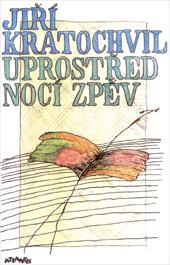
Uprostřed noci zpěv / Singing in the Middle of the Night
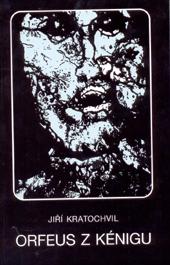
Orfeus z Kénigu / Orfeus from Koenig
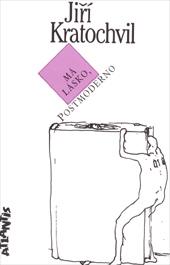
Má lásko, postmoderno / O Postmodern, My Love
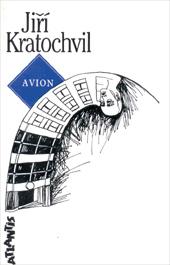
Avion
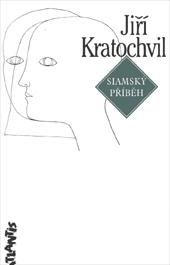
Siamský příběh / Siamese Story
Noční tango / Nocturnal Tango
Urmedvěd / Ur-bear
Vyznání příběhovosti / A Declaration of Love to/from the Nature of the Story
Truchlivý Bůh / Despondent God
Brno nostalgické i ironické / Brno: Nostalgic and Ironic
Lehni, bestie! / Lie down, Beast!
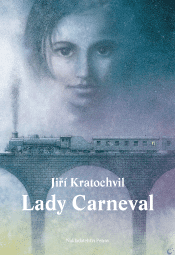
Lady Carneval / Lady Carnival
Nesmrtelný příběh / Immortal Story (second edition)
